


On 6 November, the Seminar on Sustainable Development in Advanced Manufacturing, hosted by the Foshan Association of Listed Companies and co-organised by China Chengxin Green Finance International, was successfully held at Midea's headquarters in Foshan. The event brought together senior executives and ESG representatives from dozens of locally listed companies in Foshan for in-depth discussions on Lighthouse Factory development, digital upgrading in manufacturing, and ESG materiality management. Ms Shen Shuangbo, Chief Operating Officer of China Chengxin Green Finance International, attended the event as a guest speaker and participant in the interactive discussions, while Ms Zhu Linlin, ESG Business Director of China Chengxin Green Finance International, served as the event moderator.
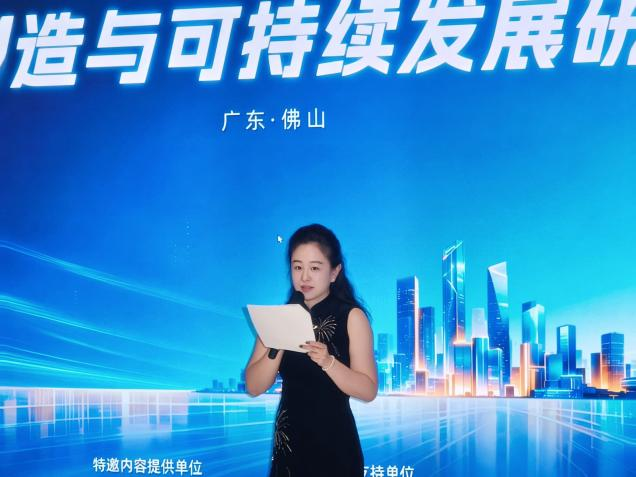
As one of China's major manufacturing hubs, Foshan has strong industrial clusters in home appliances, ceramics and equipment manufacturing. The transformation and upgrading of manufacturing is both a practical challenge for enterprises and a key factor in advancing the manufacturing sector across the Greater Bay Area. In 2018, the World Economic Forum (WEF) advocated the establishment of the Lighthouse Factory standard, which serves as a benchmark for ESG practices among manufacturing enterprises worldwide. Foshan currently has three Lighthouse Factories: Midea's Shunde Microwave Oven Factory, Midea's Shunde Kitchen and Water Heating Dishwasher Factory, and Haitian Flavouring and Food's Gaoming Factory.
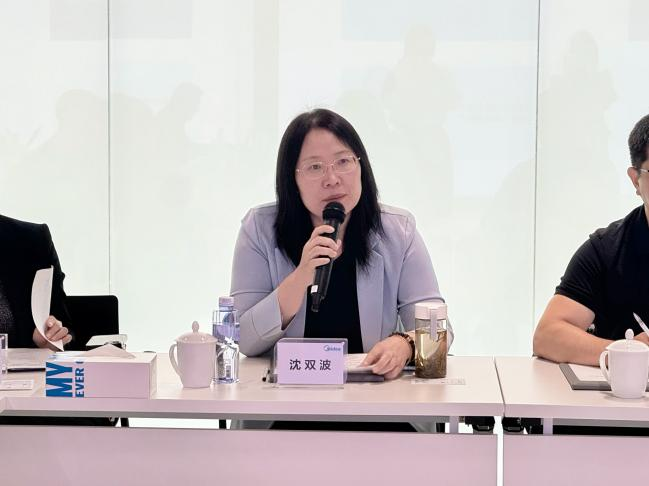
During her remarks, Ms Shen Shuangbo noted that Foshan is home to a large number of industry-leading enterprises. Local listed companies have generally demonstrated strong performance in both ESG report disclosure rates and disclosure quality. However, many enterprises remain focused on passively meeting regulatory disclosure requirements. She emphasised that ESG should deliver two tangible forms of value to enterprises. First, sustainable finance empowerment: leveraging robust ESG practices to help enterprises reduce financing costs and attract long-term institutional investors. Second, creating comprehensive value for stakeholders and enhancing enterprises' core market competitiveness. She also cautioned that enterprises across different industries and stages of development should not blindly benchmark their ESG efforts against leading companies. Instead, they should pursue ESG development pathways suited to their industry characteristics and current stage of development.
Looking ahead, China Chengxin Green Finance International will continue to deepen its collaboration with the Foshan Association of Listed Companies. Building on the groundwork established through China's first white paper on the sustainable development of listed companies at the prefecture-level city level, the company will continue to serve manufacturing enterprises in Foshan. It will help more Foshan enterprises establish practical pathways for digital transformation, green and low-carbon upgrading, and ESG system development, supporting the steady advancement of Foshan's manufacturing sector in advanced manufacturing and sustainable development, while contributing professional expertise to the high-quality development of the regional manufacturing industry.

