


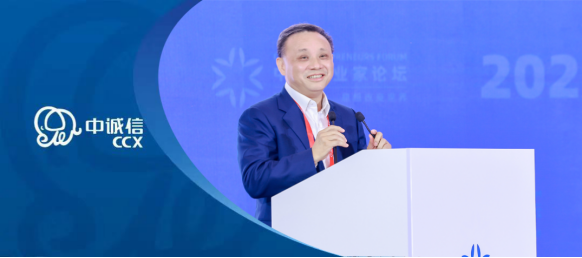
From August 25 to 26, the 2023 Summer Summit of the Yabuli Forum was held in Shenzhen. Mao Zhenhua, Professor of Economics at the School of Business and Economics of the University of Hong Kong, Director of the Yabuli China Entrepreneurs Forum, and Founder of China Credit Trust Group, delivered an opening speech, talking about the importance of Hong Kong to China and the future development of the Guangdong-Hong Kong-Macao Greater Bay Area.
Mao Zhenhua said that Hong Kong was once a pearl of China and made special contributions during the colonial period, during China's reform and opening-up process, and during China's transformation. At this critical historical juncture of the great changes that have not been seen in a century, against the backdrop of the Sino-US game, the rise of anti-globalization, and the cyclical adjustment of China's economy, Hong Kong can still play an important role.
This article is the author’s speech at the Yabuli Summer Summit (Shenzhen) on August 25, 2023. The following is the full text of the speech:
It is a great honor for me to speak at this conference. I would like to share with you some of my research and understanding of Hong Kong and its economy since I was hired by the University of Hong Kong last year.
As we all know, Hong Kong's economic and social development is facing some difficulties at present, but Hong Kong once had a period of smooth sailing. At that time, there was a saying that Hong Kong was a city that "had good luck with both sides", that is, when the Western economy was good, Hong Kong was also good, and when the Chinese economy was good, Hong Kong was also good. Even if one side's economy was not good, Hong Kong's development was still supported. But now Hong Kong has gone from "having good luck with both sides" to "hitting the wall on both sides". No matter which side has problems, Hong Kong will be affected. What has Hong Kong experienced? What difficulties are it facing now? What will the future look like? Especially as the core city of the Greater Bay Area, what kind of fit will be formed between the twin cities of Shenzhen and Hong Kong in the future? I think this is a question that everyone is very concerned about.
Hong Kong has experienced multiple shocks in the past four years. In simple terms, it has encountered "two black swans" and "two gray rhinos". One of the black swans was the "anti-extradition bill amendment" incident in 2019. This unrest had a great impact on Hong Kong society. With the introduction of the National Security Law, Hong Kong has begun a journey from chaos to governance, but it will take some time for the social trauma to heal. Another black swan event is the COVID-19 pandemic, which has caused a huge impact on the world. Hong Kong's experience in dealing with the pandemic is very special. Due to its special system and mechanism, Hong Kong must not only open up to overseas connections, but also coordinate exchanges with the mainland. It must make a very difficult balance between the two epidemic prevention and control models of China and the West, and it has also paid a huge cost. Although the impact of the current epidemic is gradually weakening, its impact on the industrial chain, the impact on people's lives, and the impact on Hong Kong's international relations still exist, and recovery will take some time.
In addition to the two black swans mentioned above, there are two gray rhinos. The so-called "gray rhino" is usually used to refer to risks that are known to exist but whose outbreak is unknown. Such risks generally have early signs, but have not been fully taken seriously. They may suddenly emerge in the thick fog, under deep water, or after a triggering event. One of the gray rhinos is the great changes that have not been seen in a century, the game between the two major powers of China and the United States. This gray rhino has intensified since 2018. The second gray rhino is the cyclical adjustment of the Chinese economy. An economy that has been developing rapidly for a long time always has a moment of adjustment, and we are now experiencing such a moment. Under the impact of the two black swans and the two gray rhinos, Hong Kong is currently facing special difficulties, which has hurt its vitality, reduced its popularity, and damaged its spirit. So, what will Hong Kong look like in the future?
Hong Kong was once a pearl of China. It made special contributions during the colonial period, during China's reform and opening up, and during China's transformation. The Xinhai Revolution was planned, organized, and funded in Hong Kong. Sun Yat-sen was the first graduate of the University of Hong Kong. Hong Kong also played a very important role in the early days of the War of Resistance against Japan. After the founding of the People's Republic of China, many talents from home and abroad returned to Hong Kong to serve the motherland. During the Korean War, imperialist countries imposed a blockade on my country, and Hong Kong played a very important role as a bridge. Since the reform and opening up, Hong Kong has assumed unprecedented historical responsibilities. To a certain extent, it can be said that Shenzhen's success today is due to its proximity to Hong Kong. At the critical historical juncture of the great changes that have not been seen in a century, against the backdrop of Sino-US competition, the rise of anti-globalization, and cyclical adjustments in China's economy, will Hong Kong continue to play an important role as always? This is an important question that we need to think about and answer seriously.
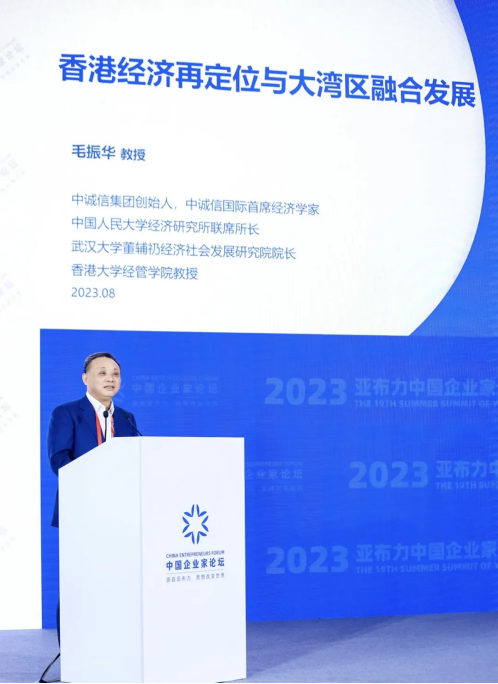
My preliminary analysis shows that Hong Kong is OK! Hong Kong can always play a special role in China's special period, and the same will be true in the future. From about 1945 to 1952, the population of Hong Kong increased from 600,000 in 1945 to 2.8 million in 1952. During this period, Hong Kong's population increased by about 300,000 people each year. The 300,000 new people each year were actually an important foundation for Hong Kong to become one of the four little dragons. These influxes of population not only brought labor, but also construction capital. With China's reform and opening up, Hong Kong's industry moved north, and Hong Kong encountered new development opportunities. Relying on the rapid development of China's economy and the financing of Chinese companies, Hong Kong gradually grew into a world financial center, and in fact, it is also a window for global investment in China. Under such a special opportunity, Hong Kong ushered in rapid development, but it also caused the deformity of its own industrial structure, which was heavily dependent on the financial and trade logistics industries, and the industrial structure was relatively single.
Whether it is the "decoupling" strategy proposed by the United States in the past or the "de-risking" strategy proposed now, it does not change the tone of the Sino-US game. Now the West has completely classified Hong Kong and the mainland into one standard, and the basic conditions for Hong Kong to assume the status of an international financial center are changing. Under the framework of "bottom line thinking + extreme thinking", will Hong Kong still be an international financial center in the future? Apart from the international financial center, what else will Hong Kong be? Clearing away the fog and looking at the essence, I believe that Hong Kong is still a very valuable Hong Kong, or even a more valuable Hong Kong. Its value comes from Hong Kong's "one country, two systems" and from the responsibilities and opportunities given to Hong Kong by the development of the country in a special period. What the motherland needs, Hong Kong does!
Under the extreme thinking, global Chinese capital is not safe in the West, and Chinese scientists and high-end talents are also not safe in the West. They hope to return to China to conduct scientific research and achieve their careers. So where is a better place for them to display their talents and play a role? Considering its long-term working and living methods, Hong Kong is an important option. But does Hong Kong have the conditions to absorb so many scientists? Not now, but I believe Hong Kong can do it in the future, because it has the strong backing of the motherland, the superior location close to Shenzhen, and the structural needs of the Greater Bay Area. This is the potential and source of power for Hong Kong. The current population of Hong Kong is about 7.33 million, and the population of Shenzhen is 17.66 million. Hong Kong accounts for about 41.5% of Shenzhen's population; however, Hong Kong's land is 1,113.76 square kilometers, while Shenzhen's is 1,997.47 square kilometers. Hong Kong accounts for 55.75% of Shenzhen's land, which means that Shenzhen's population density is higher than that of Hong Kong. If the ocean area is added, Hong Kong accounts for about 87.65% of Shenzhen's land area, but the population is only 41.5%. The planned area of Hong Kong's northern metropolitan area has reached 300 square kilometers, while the Shenzhen Special Economic Zone line is only 320 square kilometers. In comparison, Hong Kong still has great potential and space for layout in the future. Another example is in the capital field. Even after such a large industrial adjustment and external shocks, the losses suffered by Hong Kong's local banking system and consortiums are still relatively small, which shows that Hong Kong is very stable.

What role can Hong Kong, which is resilient and has great potential, play under the "one country, two systems" policy? What advantages can Hong Kong still tap? I think Hong Kong has the ability to play an important role in the two fields of education and technology.
First of all, in the field of education. Among the top 100 universities in the QS rankings in 2023, Hong Kong has 5 universities with strong scientific research capabilities. Of course, Hong Kong universities also have many shortcomings, and the QS ranking of the University of Hong Kong is not as good as that of the National University of Singapore, but I don’t think this is important. What is important is that in the context of "decoupling", we need international talents and need to cultivate talents in an all-English context, which can be achieved in the Hong Kong education system under the "one country, two systems". I have taught in universities in both the Mainland and Hong Kong. From a personal perspective, I think the two systems are very different, and we need an education system like Hong Kong. The number of college students in Hong Kong is only about 300,000, accounting for about 4% of its population, while the number of college students in Wuhan and Guangzhou accounts for more than 8% of the permanent population. If only the urban population of Guangzhou and Wuhan (both about 7 million) is considered, then this proportion will increase further. Compared with Guangzhou, Wuhan and other educational centers, the proportion of students in Hong Kong is relatively low, and university teachers in Hong Kong have to retire at the age of 60. If we increase the proportion of students in school, we can attract more international talents, including more professors, associate professors, assistant professors, and scientists to work in Hong Kong. This is a win-win situation. China needs more such high-end talents, and Hong Kong can also absorb more scientists. In addition, education is an industry in Hong Kong. The current training cost of each master's student is about 350,000 to 400,000 Hong Kong dollars. The current ratio of applicants to admissions is about 10:1. Judging from the application ratio of global universities, Hong Kong's admission rate is also low, and there are more students who hope to study in Hong Kong. If universities expand the enrollment of 300,000 graduate students, the annual tuition fees can exceed 100 billion Hong Kong dollars, plus the consumption of food, clothing, housing and transportation, it is a considerable market. It can be said that the development potential of Hong Kong's education industry in the future is still very large.
Another is the technology industry. Hong Kong is not a technology city, nor an industrial city. But Hong Kong has the conditions to develop the technology industry. Like Shenzhen, Hong Kong has the advantage of being backed by the super-large market of the motherland, and the mainland also has a strong manufacturing base. On this basis, Hong Kong has the conditions to attract large technology companies, and more importantly, to attract Chinese scientists from all over the world. Hong Kong has low taxes, clear property rights, and it is easier for companies to go public. In addition, with a familiar language environment, network environment, education environment, and a relatively convenient international exchange environment, Hong Kong is very attractive to high-end talents who come to work and settle in Hong Kong.
Will the development of science and technology industries in Hong Kong weaken Shenzhen? I don't think so. In the process of promoting the development of the Greater Bay Area, we must see that Hong Kong and Shenzhen have their own advantages. There should be a natural division of labor, a scientific layout, and healthy competition. If Hong Kong has more cutting-edge international scientific and technological research and development, Shenzhen will have better and further in-depth development and application, and will also be directly connected to the vast domestic market. The two cities will be a complete win-win. I don't quite agree that if some of the R&D centers of Huawei, BYD, and Tencent in Shenzhen go to Hong Kong, it will affect Shenzhen. I think we should do our best to go to Shenzhen (what should be in Shenzhen should be in Shenzhen), and what should be in Hong Kong should be in Hong Kong (what should be in Hong Kong should be in Hong Kong), so as to form a healthy competition pattern.
Overall, I think the advantage of the Greater Bay Area is ultimately due to Hong Kong. The most important and fundamental advantage of Hong Kong is "one country, two systems". In this sense, the Greater Bay Area is a place where advantages are converted and recreated. I also believe that Hong Kong and the Greater Bay Area will definitely hand in a beautiful answer sheet in this historical test of great changes, and will definitely write a magnificent historical chapter of the rejuvenation of the Chinese nation in the new era.
--------------------------

Mao Zhenhua is the Chairman and Founder of China Chengxin Group, Chief Economist of China Chengxin International, Director of Yabuli China Entrepreneurs Forum, Professor of School of Business and Economics of the University of Hong Kong, Member of the Expert Group of the Chief Executive's Policy Unit of the Hong Kong Special Administrative Region Government, Co-Director and Professor of the Institute of Economics of Renmin University of China, Dean of Dong Furong Institute of Economic and Social Development of Wuhan University, and Co-Chairman of China Macroeconomic Forum (CMF).
